Oxygen Art Centre is delighted to welcome Bolivian photographer based in Fernie, B.C., Gabbi Escobar Ari for a residency in conjunction with the hedge-rider: online mentorship program from December 5, 2026, to December 12, 2026.
Hedge-rider is a Mentorship program hosted by Oxygen Art Centre for emerging, remotely located artists with Genevieve Robertson. Hedge-rider was launched earlier this year, with Gabbi one of three artists selected to participate in the first cohort.
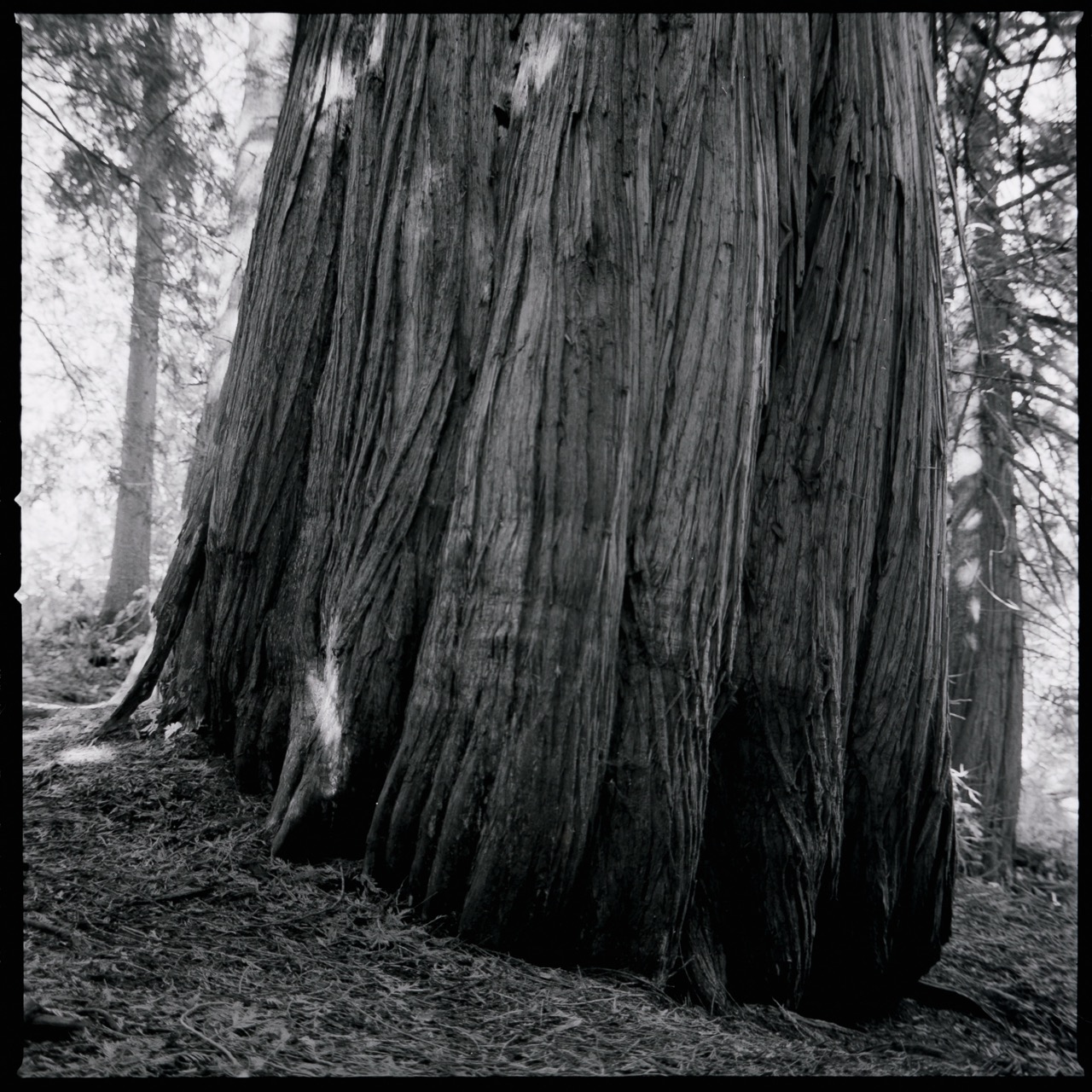
Over the course of the mentorship program, it was quickly identified that Gabbi’s project would benefit from time and space to experiment with an installation titled, A Transforming Portrait of An Ancient Tree. With this, Gabbi will be in residence at Oxygen’s downtown Nelson studio for one-week to enact this installation and engage with local community members.
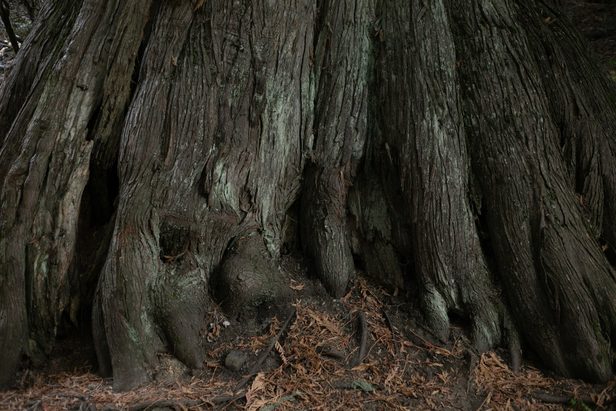
A Transforming Portrait of an Ancient Tree is an evolving audiovisual installation that combines analogue photographic negatives, digital documentation (photography and video), forest field recordings, experimental recordings of surface vibrations, and real-time generative visual programming. Through these processes, the image of a centuries-old tree moves between recognition, fragmentation, reconstruction and abstraction, exploring how different technologies shape our ways of seeing, documenting and interpreting the world, as well as the limitations of each.
The residency will close with a public open studio event on Saturday, December 12, 2026, from 1:00pm to 3:00pm. The Open Studio event is an informal opportunity to meet with the artist and learn about the processes and experiments explored while in residence. Admission is free. Everyone welcome to attend.
This project is generously supported by the Vancouver Foundation’s Transforming Systems Grant. Special thank you to Genevieve Robertson for her excellent mentorship. Additional thanks to Gallery Preparator Kenton Doupe and Operations Manager Dara van der Meulen for their support in realizing this installation. More information about the second iteration of the hedge-rider program will be announced in the new year.
Gabbi Escobar Ari will be artist-in-residence at Oxygen Art Centre from December 5 – 12, 2026. The artist-run centre welcome the public to meet with the artist and interact with her installation at the Open Studio event on Saturday, December 12, 2026, from 1:00pm to 3:00pm.
ARTIST BIOGRAPHY
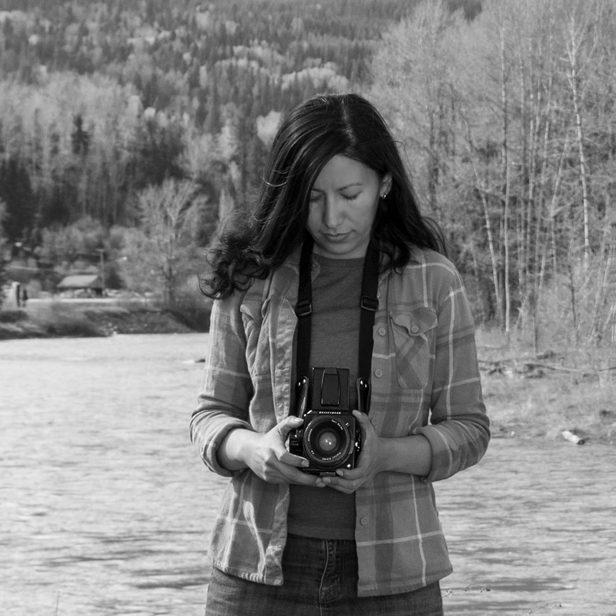
Gabriela Escobar Ari is a Bolivian photographer based in Fernie, British Columbia. She studied archaeology at Universidad Mayor de San Andrés (UMSA) in Bolivia and photography at the Southern Alberta Institute of Technology (SAIT) in Canada. Her practice spans documentary and community-based photography, analogue photographic processes, the digitization of photographic archives, and contemporary digital imaging. Working across personal and commissioned projects, she investigates how images shape memory, belonging, and our experience of time. Her current project, A Transforming Portrait of an Ancient Tree, explores technological and ecological change through an encounter with an ancient tree in British Columbia.
Gabriela lives and works in Fernie, within Qukin ʔamakʔis, the unceded territory of Yaq̓it ʔa·knuqⱡi’it First Nation, whose members are part of the Ktunaxa-speaking peoples. She acknowledges their ongoing relationships with and stewardship of these lands and forests.
ARTIST STATEMENT
My practice is shaped by memory, the ways technological and societal transformations reshape our relationship with images and places, and the connections between photography and our perception of time. I am interested in what photographs can preserve, but also in what they can’t fully contain: the feeling of a place, the distance created by migration, or the emotional resonance of an image encountered years after it was made.
I have worked across different generations of photographic technology, developing film and making prints, digitizing analogue archives, producing digital spatial representations for clients, and working with artificial intelligence in commissioned projects. These processes coexist in my practice. Rather than treating analogue and computational images as opposites, I am interested in how both alter the ways we make, share, interpret and remember images.
I continue to value the material processes of film photography. Exposure, development, handling, storage, and the passage of time leave traces that become part of an image’s history. Yet I am equally curious about the possibilities of new tools and the changing habits that accompany them. The process of producing an image matters to me as much as its final appearance.
Having migrated from Bolivia to Canada, I also work between different languages, landscapes and cultural experiences. These experiences inform the questions I bring to photography without requiring every image to represent migration directly. Across documentary, commercial and experimental work, I return to the unstable relationship between what we encounter, what we record and what remains beyond representation.
All images courtesy the Artist, Gabriela Escobar Ari, 2026